
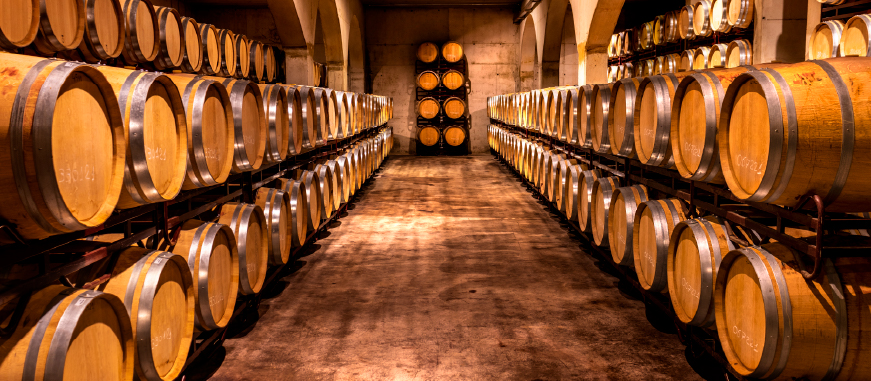
Few products are as closely connected to a city’s identity as Port wine and Porto. For centuries, this fortified wine has played an important role in the region’s economy, culture, and international reputation, becoming one of Portugal’s most recognisable exports.
Table of Contents
Although Port wine is produced in the Douro Valley, its story is closely tied to Porto itself. The vineyards are located inland, but the wine has always travelled downstream along the Douro River towards the city. From there, it was stored, aged, and traded, mainly in Vila Nova de Gaia, on the south bank of the river, directly opposite Porto’s historic centre.
This proximity between the two riverbanks is still one of the most interesting parts of the story. On one side, you have the narrow streets and granite buildings of Porto; on the other, the long row of wine cellars in Gaia, many of them still active today. Together, they form a landscape shaped by trade, transport, and centuries of tradition.
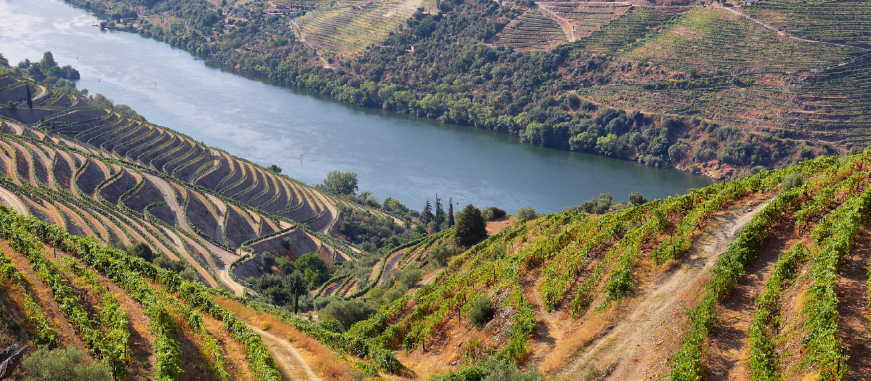
Today, these places are open to visitors, and they remain one of the best ways to understand how the region developed. Some are historic wine cellars right in the city area, while others are estates deeper in the Douro Valley where production begins. Here are five wineries and estates worth visiting, along with where to find them.
1. Taylor’s Port – Vila Nova de Gaia (Porto riverside)
One of the most historic Port wine cellars in the city, Taylor’s is located in Vila Nova de Gaia, just across the river from Porto’s Ribeira district. The cellars sit on a slope overlooking the city, and visiting them gives a clear sense of how closely Porto and the wine trade have always been connected.
2. Graham’s Port Lodge – Vila Nova de Gaia (Porto riverside)
Also located in Vila Nova de Gaia, Graham’s sits higher up on the hillside, offering one of the best panoramic views over Porto. The lodge is still active and continues the traditional ageing process that defined this part of the riverfront for centuries.
3. Quinta do Vallado – Peso da Régua (Douro Valley)
About 1h30–2h from Porto, in the heart of the Douro Valley, Quinta do Vallado is one of the region’s oldest estates. It is surrounded by terraced vineyards along the Douro River and represents the beginning of the Port wine journey before it reaches the city.
4. Quinta do Crasto – Sabrosa (Douro Valley)
Located further upriver near Sabrosa, Quinta do Crasto is known for its dramatic hillside vineyards overlooking the Douro. It is one of the most visually striking estates in the region and gives a strong sense of the landscape that defines Port wine production.
5. Quinta de São Luiz – Tabuaço (Douro Valley)
Situated in the Douro Valley near Tabuaço, this estate is part of one of the oldest Port wine houses. Quinta de São Luiz combines vineyard production with heritage, linking modern winemaking with centuries of tradition.
From the Douro to Porto
Port wine is not tied to a single place, but to a journey that moves between the vineyards of the Douro Valley, the river that connects them, and the city of Porto, where the wine has been stored and traded for centuries. Each location plays a different role, but together they form a continuous story that has shaped the region.
Visiting these wineries and estates is not just about wine tasting, but about understanding how landscape and city are linked. The steep terraces of the Douro explain where the wine begins, while the cellars of Vila Nova de Gaia show how it has been preserved and shared with the world.
Seen together, these places give a clearer sense of why Port wine and Porto remain so closely connected today.