
The historic center of Porto is one of the main reasons why the city was classified as a UNESCO World Heritage Site. Between medieval churches, imposing palaces, and contemporary architectural works, Porto brings together an extraordinary diversity of styles that reflect different periods in Portuguese history.
Many of the historic buildings in Porto continue to be part of the city’s daily life. Some maintain their religious function, others continue to receive visitors, readers and travelers, while some have become true symbols of the Invicta (Porto’s nickname).
Index
- Why does the architecture of Porto tell the story of Portugal?
- 1. Church of Saint Francis: the splendor of Gothic architecture in the heart of the city.
- 2. Palácio da Bolsa: the elegance of neoclassicism
- 3. São Bento Station: the station of the tiles
- 4. Clérigos Tower: the city’s great icon.
- 5. Lello Bookstore: one of the most beautiful bookstores in the world.
- 6. Serra do Pilar Monastery: history and views over the Douro River
- 7. Casa da Música: when contemporary architecture also makes history
- 8. Menina Colina Building: a new page in Porto’s architecture.
- How to visit the historic buildings in Porto
- Discover the history of Porto in greater depth.
If you enjoy history, architecture, or simply want to discover Porto beyond its viewpoints, these eight buildings reveal the stories that have shaped the city over the centuries.
Why does the architecture of Porto tell the story of Portugal?
The architecture of Porto reflects centuries of evolution. Gothic churches, Baroque monuments, Neoclassical palaces, and contemporary buildings coexist in a relatively small area, representing different moments in Portuguese history.
Together, they show how Porto evolved from an important medieval trading center into one of Portugal’s leading cultural and economic cities. Exploring these buildings is one of the best ways to understand the city beyond its superficial beauty.
1. Church of Saint Francis: the splendor of Gothic architecture in the heart of the city.
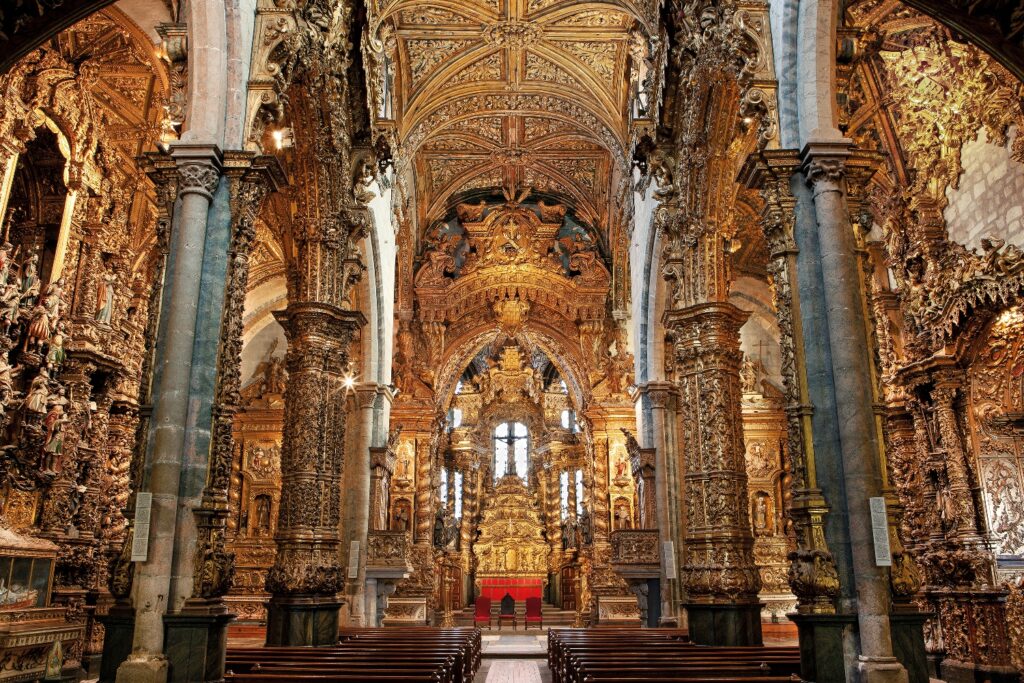
One of the most important historical buildings in Porto, the Church of São Francisco stands out for combining a Gothic structure with one of the most exuberant Baroque interiors in Portugal. Located next to the Ribeira, it is one of the city’s most visited monuments.
History and architecture
Its construction began in the 14th century, making it one of the oldest churches in Porto. The exterior retains the characteristics of the Gothic style, while the interior impresses with the magnificent Baroque gilded carvings that cover practically the entire church, creating a unique contrast between the two styles.
Tips for your visit:
The church is a short walk from Ribeira and Palácio da Bolsa, making it easy to include in a tour of the historic center. Combined tickets are usually available for visiting the church and the catacombs.
2. Palácio da Bolsa: the elegance of neoclassicism
The Palácio da Bolsa (Stock Exchange Palace) is one of Porto’s most elegant historical buildings. Built during the 19th century to house the Porto Commercial Association, it continues to symbolize the city’s economic and commercial importance.
History and architecture
Designed in the neoclassical style, it was built on the site of a former Franciscan convent. The most emblematic space is the famous Arab Hall, inspired by Moorish architecture and considered one of the highlights of the visit.
Tips for your visit:
Located next to the Ribeira and the Church of São Francisco, it easily integrates into any itinerary through the historic center. Visits are conducted exclusively through guided tours.
3. São Bento Station: the station of the tiles
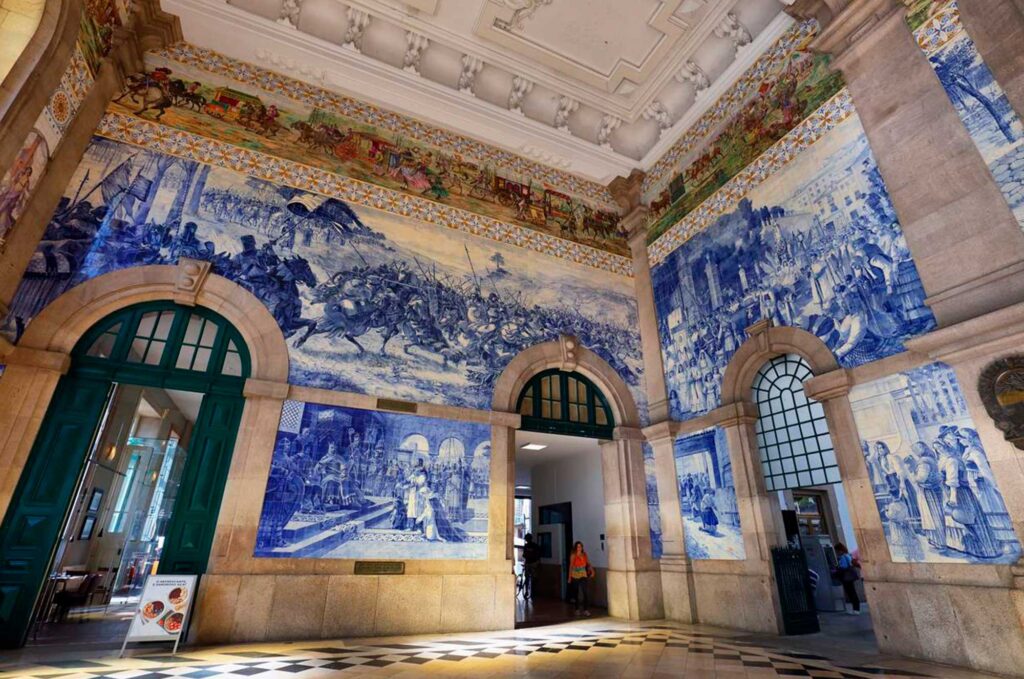
São Bento Station is one of Porto’s most emblematic landmarks and is often considered one of the most beautiful train stations in Europe.
History and architecture
Inaugurated at the beginning of the 20th century, it was built on the site of the former Monastery of São Bento da Avé Maria. Its main highlight is the main atrium, covered with more than 20,000 tiles painted by Jorge Colaço, which depict significant episodes in the history of Portugal and scenes from daily life.
Tips for your visit:
Entry is free and the station is located just a few minutes from Aliados, Clérigos Tower and downtown Porto. To appreciate the panels in greater peace and quiet, it’s best to avoid peak train traffic hours.
4. Clérigos Tower: the city’s great icon.
Few historic buildings in Porto are as recognizable as the Clérigos Tower. Rising above the historic center, it has become one of the city’s most iconic symbols.
History and architecture
Designed by the Italian architect Nicolau Nasoni during the 18th century, the tower is one of the greatest examples of Portuguese Baroque architecture. Standing over 75 meters tall, it served for many years as a landmark for ships approaching the city.
Tips for your visit:
It’s possible to climb to the top of the tower and enjoy a panoramic view over the rooftops of Porto, the Douro River, and the historic neighborhoods. Visiting in the morning usually helps to avoid queues.
5. Lello Bookstore: one of the most beautiful bookstores in the world.
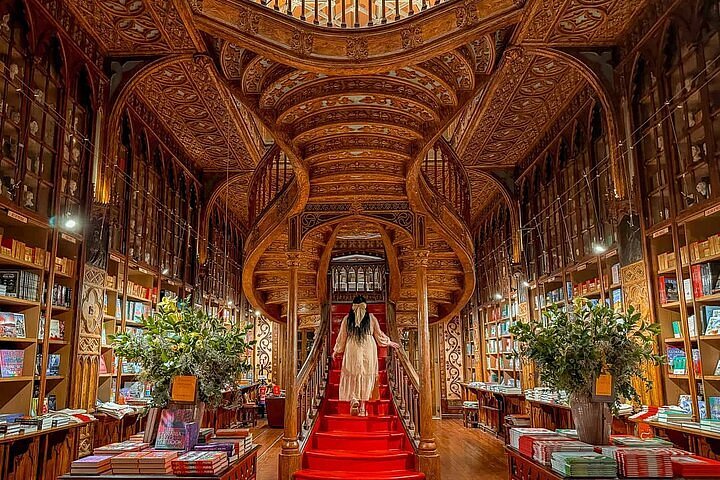
Livraria Lello is one of the most visited places in Porto and is frequently ranked among the most beautiful bookstores in the world. Its architecture attracts thousands of visitors every year.
History and architecture
Inaugurated in 1906, it combines neo-Gothic elements with unique decorative details. The famous red staircase, the stained-glass ceiling, and the carved woodwork have made it one of the most photographed buildings in the city.
Tips for your visit:
Due to high demand, it is advisable to book tickets in advance, especially on weekends and during peak season.
6. Serra do Pilar Monastery: history and views over the Douro River
Located on the south bank of the Douro River in Vila Nova de Gaia, the Serra do Pilar Monastery offers one of the most famous views over Porto.
History and architecture
Built between the 16th and 17th centuries, it is distinguished by its rare circular church and cloister, also circular in plan, a virtually unique case in Portuguese religious architecture. Together with the historic center of Porto, it is a UNESCO World Heritage Site.
Tips for your visit:
It is located a few minutes’ walk from the upper deck of the Luís I Bridge. Sunset is one of the most popular times to visit this spot.
Read also: The architecture of Porto’s Old Town
7. Casa da Música: when contemporary architecture also makes history
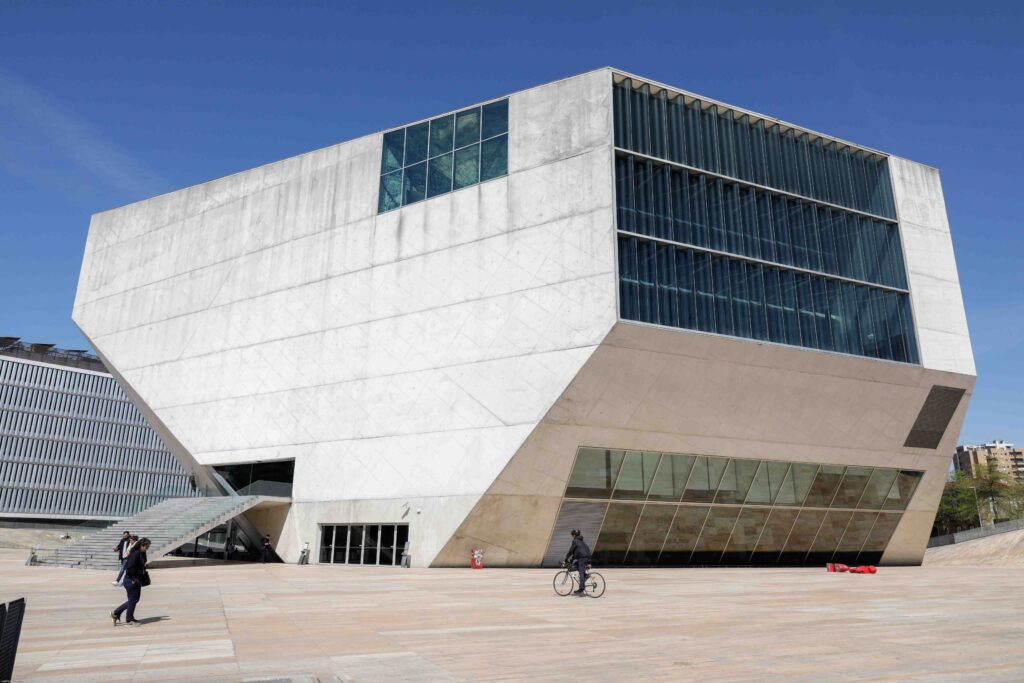
Although most of the historic buildings in Porto are several centuries old, the Casa da Música represents a more recent chapter in the city’s architecture.
History and architecture
Designed by Dutch architect Rem Koolhaas and inaugurated in 2005, it emerged as part of the European Capital of Culture program. Its geometric and bold design contrasts with the traditional architecture of Porto, demonstrating the city’s ability to combine heritage and innovation.
Tips for your visit:
Located in Boavista, it can be visited through guided tours or during concerts and cultural events. Even viewed only from the outside, it is one of the most striking buildings in the city.
8. Menina Colina Building: a new page in Porto’s architecture.
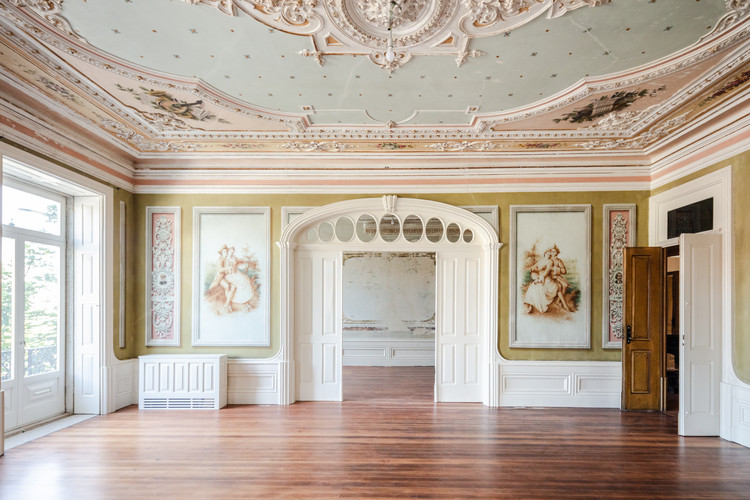
Located in one of Porto’s historic areas, the Menina Colina building represents how the city continues to evolve without losing its connection to its heritage.
History and architecture
Instead of replicating old styles, the building adopts a contemporary architectural language that respects its historical surroundings. The project demonstrates the balance between preservation and renovation that characterizes many urban interventions in the city.
Tips for your visit
: While strolling through the surrounding area, observe how contemporary architecture interacts with historical buildings. Menina Colina is an excellent example of this coexistence.
How to visit the historic buildings in Porto
Most of the historic buildings in Porto are located in or near the historic center, making it easy to create a walking route.
An itinerary that includes São Bento Station, Clérigos Tower, Lello Bookstore, São Francisco Church, and the Stock Exchange Palace can be comfortably completed in a single day.
If you wish to visit the interiors, it is recommended to confirm the opening hours beforehand, as some monuments can only be visited through guided tours or may be subject to change due to religious celebrations or cultural events.
Wear comfortable shoes, as the streets of Porto are known for their hills and cobblestones. Take advantage of the opportunity to stop along the way, whether for a coffee, a meal, or simply to enjoy the view over the Douro River.
Discover the history of Porto in greater depth.
The historic buildings in Porto tell only part of the city’s story. Beyond the churches, monuments, and emblematic buildings, there are centuries of traditions, riverside neighborhoods, local culture, and lesser-known places that help to truly understand Porto’s identity.
This chapter is just the beginning of the discovery.
Throughout our eBook about Porto you will find exclusive recommendations, historical curiosities, routes and local suggestions that will allow you to get to know the city in a much more authentic way.
More than just visiting monuments, discover the hidden stories, the lesser-known places, and the details that many visitors miss. It is this perspective that makes Porto one of the most fascinating cities in Portugal.